Navigating ever-changing markets is nothing new for family offices, and many are cognizant of the fact that they have much work to do to be future-ready. As we delve deeper into the landscape of multi-asset strategies with insights from WMI’s faculty member Aaron Low, currently the Deputy President of CFA Singapore and a seasoned expert in the field, it becomes increasingly apparent that staying abreast of essential trends and anticipating key developments is paramount.
“The complexities of developed versus emerging markets have significant implications for multi-asset portfolio construction,” says Aaron. Have you considered how geopolitical tensions, technological advancements, and sustainability imperatives could redefine your investment approach across these markets?
Essential trends to monitor
Aaron shared that such complexities of developed vs emerging markets “impact risk, return, and correlation characteristics within a portfolio, necessitating nuanced strategies to harness opportunities and manage challenges in both spheres.”
For instance, developed markets boast stability and increased innovation and technology leadership on the mature sectors, which makes them a great defensive component in a multi-asset portfolio. But for growth, the emerging markets offer higher yield potential, and their volatile nature makes them a dynamic buffer as they are not correlated with traditional products.
To keep the portfolio in check, Aaron offers six trends to watch:
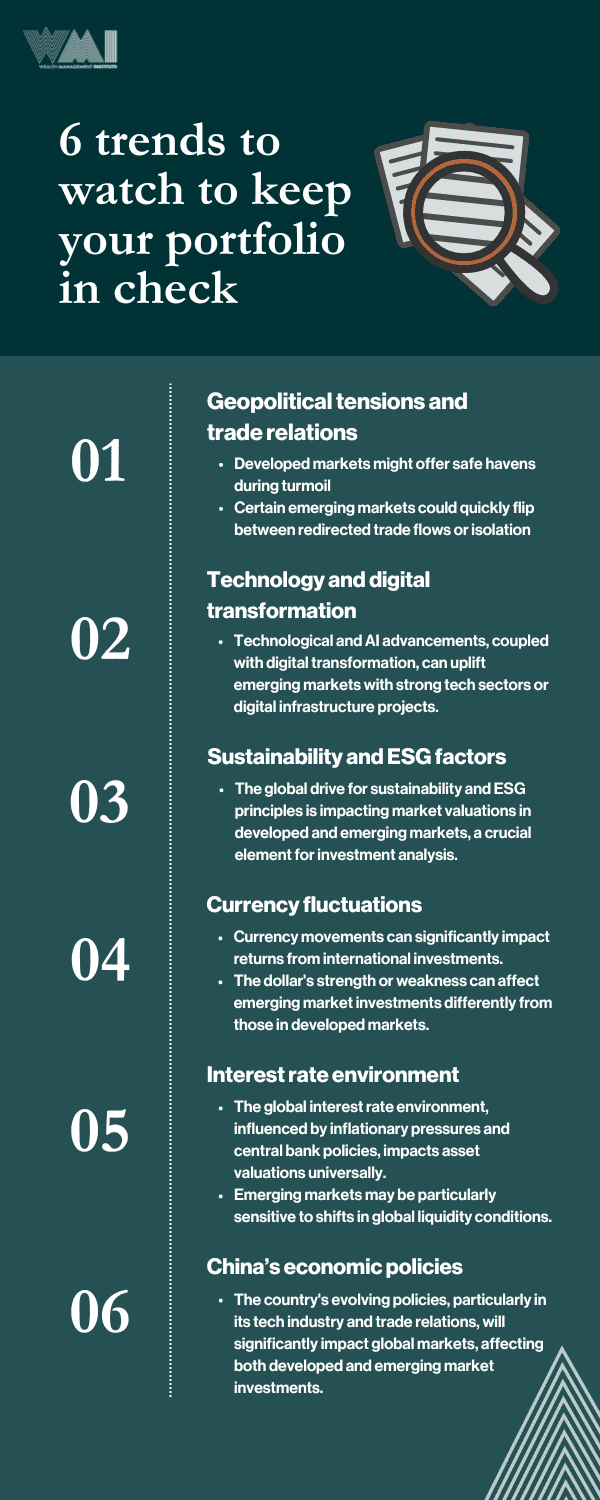
“Investors should approach portfolio construction with a keen awareness of these complexities and trends,” Aaron concludes. “Adjusting strategic asset allocation to reflect these dynamics, while employing tactical adjustments in response to short-term opportunities and risks, can enhance portfolio resilience and performance potential.”
Key developments that may alter the future of multi-asset investing
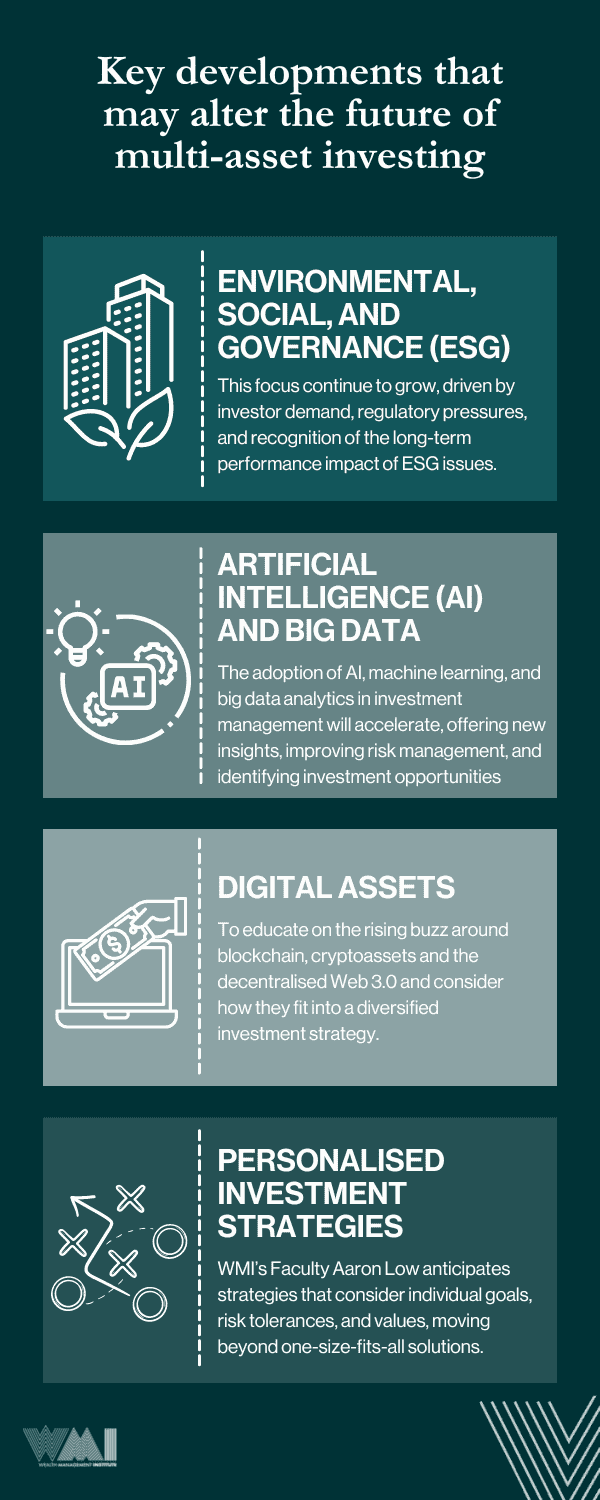
According to Aaron, it is evident that significant shifts are on the horizon. He says, “The focus on Environmental, Social, and Governance (ESG) factors will continue to grow, driven by investor demand, regulatory pressures, and recognition of the long-term performance impact of ESG issues.” In response, he suggests, “Investors should enhance their ESG evaluation capabilities, integrate ESG factors into their investment analysis and decision-making processes, and be ready to engage actively with companies on sustainability issues.”
Another area Aaron points out is the increased use of Artificial Intelligence (AI) and Big Data in businesses today. “The adoption of AI, machine learning, and big data analytics in investment management will accelerate, offering new insights, improving risk management, and identifying investment opportunities,” he shared. He added that investors should, “Stay abreast of technological advancements and consider partnerships with tech firms or investments in technology platforms that can enhance analytical capabilities and investment decision-making.”
With all the growing buzz around blockchain, cryptoassets and the decentralised Web 3.0, Aaron says, “Educate yourself on the risks and opportunities associated with digital assets and consider how they fit into a diversified investment strategy.” In this way, one can truly optimise their portfolio for the future.
As technological products advance, he also anticipates that it will allow for and increase personalised investment strategies that consider individual goals, risk tolerances, and values, moving beyond one-size-fits-all solutions. In light of continued seismic geopolitical and economic shifts, Aaron believes that this will allow investors to be more dynamic, adjusting to evolving trends and regulations, as well as introduce a more forward-looking adaptive risk management approach.
“To navigate these trends successfully, investors should remain flexible, continuously educate themselves, and embrace innovation,” he says.
Conclusion
In conclusion, the evolving landscape of multi-asset investing demands proactive engagement with emerging trends and developments. By leveraging insights from Aaron and continuously educating oneself on market dynamics through WMI’s series of courses such as Certificate in Multi-Asset Investing, investors can navigate complexities with confidence and position their portfolios for sustainable growth in a rapidly changing world.
Learn more about WMI’s Certificate in Multi-Asset Investing